

Craniofacial Biology PhD Program
The Doctorate of Philosophy degree in craniofacial biology focuses on training the next generation of investigators in basic science, clinical and translational biomedical research related to the craniofacial complex.
The goal of this multidisciplinary program is to provide students with the skills to become leaders in oral health and medical research, advanced research scientists able to translate basic findings into diagnostics, treatments and ultimate cures.
Research and training opportunities span investigations in craniofacial and oral biology, biomineralization, cell biology, clinical trials/experimentation, developmental biology, cytokine biology, biomaterials, tissue engineering, stem cell research, neuroscience, immunology, virology, pathology, microbial molecular genetics, endodontics and periodontology.
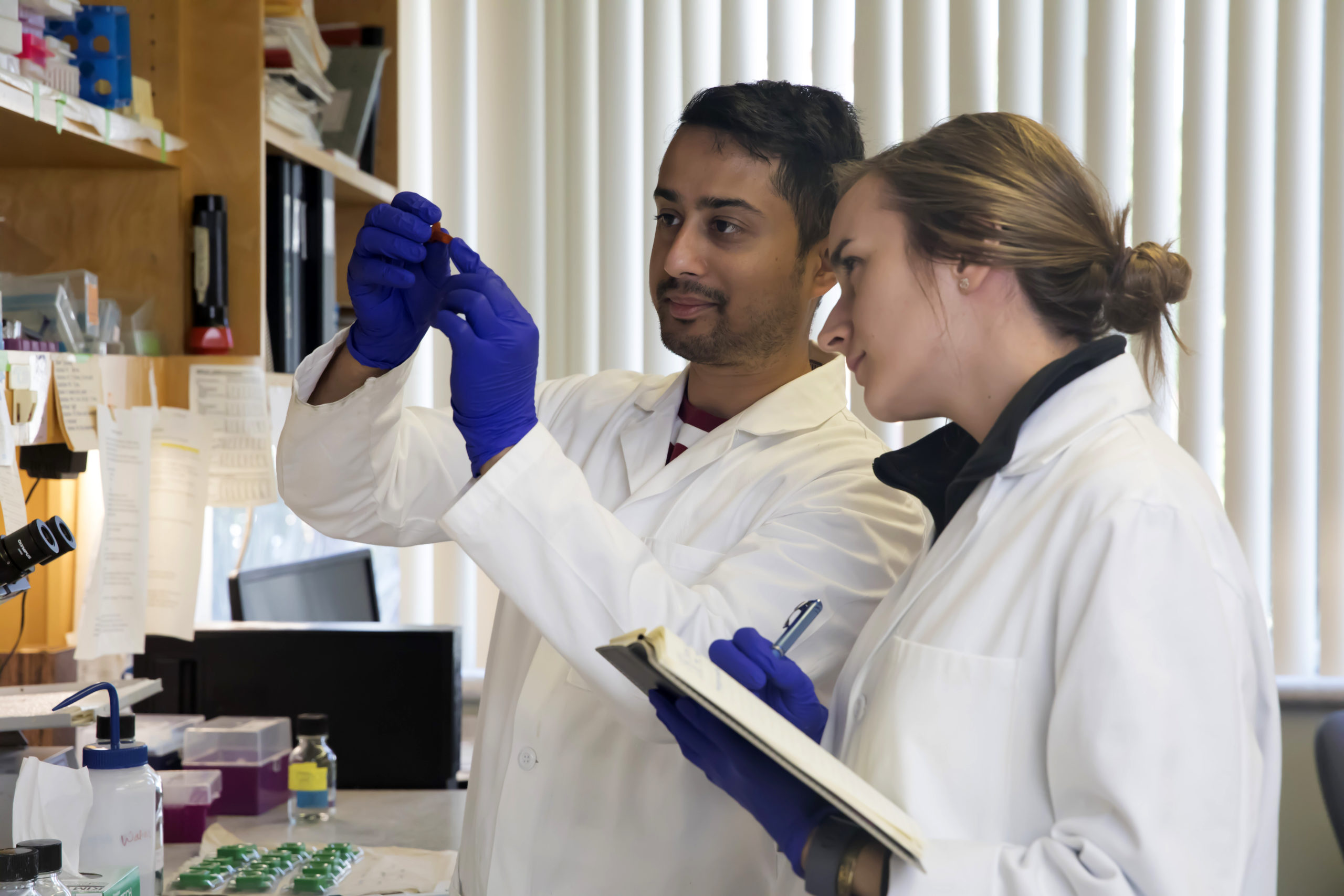
The Craniofacial Biology Graduate Program is administered by the USC Graduate School. Admitted students generally have a strong background in biological sciences or chemistry.
The National Institutes of Health (NIH) has awarded Ostrow a training grant (T90/R90) to provide PhD candidates and postdoctoral trainees a broadened, interdisciplinary research experience in a research-intensive university setting.
We are looking for promising investigators who seek research and training opportunities in craniofacial and oral biology, biomineralization, cell biology, clinical trials/experimentation, developmental biology, cytokine biology, biomaterials, tissue engineering, neuroscience, immunology, microbial molecular genetics and periodontology.
How to Apply
apply to the craniofacial biology phd program
no graduate record examinations (GRE) required

application deadline extended to January 1, 2024
The deadline for applications and all supporting materials is January 1, 2024. Late applicants may be considered if space in the program allows. Applicants who have completed or are in the process of completing a four-year bachelor’s degree or equivalent from an accredited college or university may be eligible to apply for admissions to the craniofacial biology PhD program. Applicants must meet minimum requirements for admission to the university (overall undergraduate GPA of 3.0). Proficiency in the English language is essential.
1. Complete the online USC Graduate Admission application profile.
- Upload/submit required documents.
- Submit required exam scores (i.e., TOEFL/IELTS/PTE for International Students) USC Institution Code: 4852
- Pay the application fee: $90 (nonrefundable).
2. Submit the following materials through the online application system.
- Personal statement
Describe your purpose and motivation for pursuing a PhD. Discuss your interest in science, academic research, why you want a graduate degree and your overall professional career goals. Describe your previous involvement in scientific research, including the goals of the work, results and significance. If you do not have previous research experience, please explain what alternative experiences you have that make you a suitable candidate for graduate school. - Letters of Recommendation
The Craniofacial Biology PhD Program requires three (3) letters from research mentors or professors with whom you have conducted independent research or who can evaluate your academic and scientific potential. Recommenders included in the online application will be contacted by email. Letters must be submitted via the online system; letters sent via email will not be accepted. - Curriculum Vitae/Resumé
- Transcripts — Upload scanned copies of official transcripts (university-issued) from all institutions attended.
3. Submitting "official transcripts."
Transcripts can be submitted via one of the following three options:
1) If you already have official transcripts on hand, you may scan and upload them directly to the “Academic History” section of the online application. Do not upload unofficial student portal print-outs.
2) Official hard-copy transcripts can be sent via postal mail or courier to USC.
If sending your transcripts via regular mail, please use the following address:
University of Southern California
USC Office of Graduate Admission
3601 South Flower Street, Room 112
Los Angeles, CA 90089-0915
If sending your transcripts via courier, please use the following address:
University of Southern California
USC Office of Graduate Admission and Financial Aid
3601 South Flower Street, Tyler 112
Los Angeles, CA 90089-0915
3) Official e-transcripts can be transmitted directly to USC by your previous institution(s).
The transcript must originate from a secure site formally linked to the sending institution.
Please instruct the vendor to email the transcripts to etrans@usc.edu. Do not send any other materials to this email address yourself. E-transcripts sent to any other address will not be downloaded, which will delay the review of your file and require you to pay for a new e-transcript to be sent.
IMPORTANT: If you are submitting transcripts via options 2 or 3, please do not send them until after you have submitted your online application and received your 10-digit USC ID number.
Thank you for your interest in USC’s Craniofacial Biology PhD Program. If you have questions or concerns, or would like more information about the program, please don’t hesitate to reach out to Janice Bea at jbea@usc.edu.
Financial Support
For accepted PhD students, tuition, health and dental benefits are fully covered by either the university or Ostrow in addition to a stipend or living allowance. The stipend is based on the acceptable cost of living in Los Angeles and may vary from year to year. The stipend for the 2023-2024 academic year is at least $40,000.